Aug 21, 2026Product Knowledge
Ceramic vs Semi-Metallic Brake Pads: Which One Should You Import?
Ceramic vs semi-metallic brake pads compared: noise, dust, braking, price, and which markets prefer each type. Practical guide for importers sourcing from China.
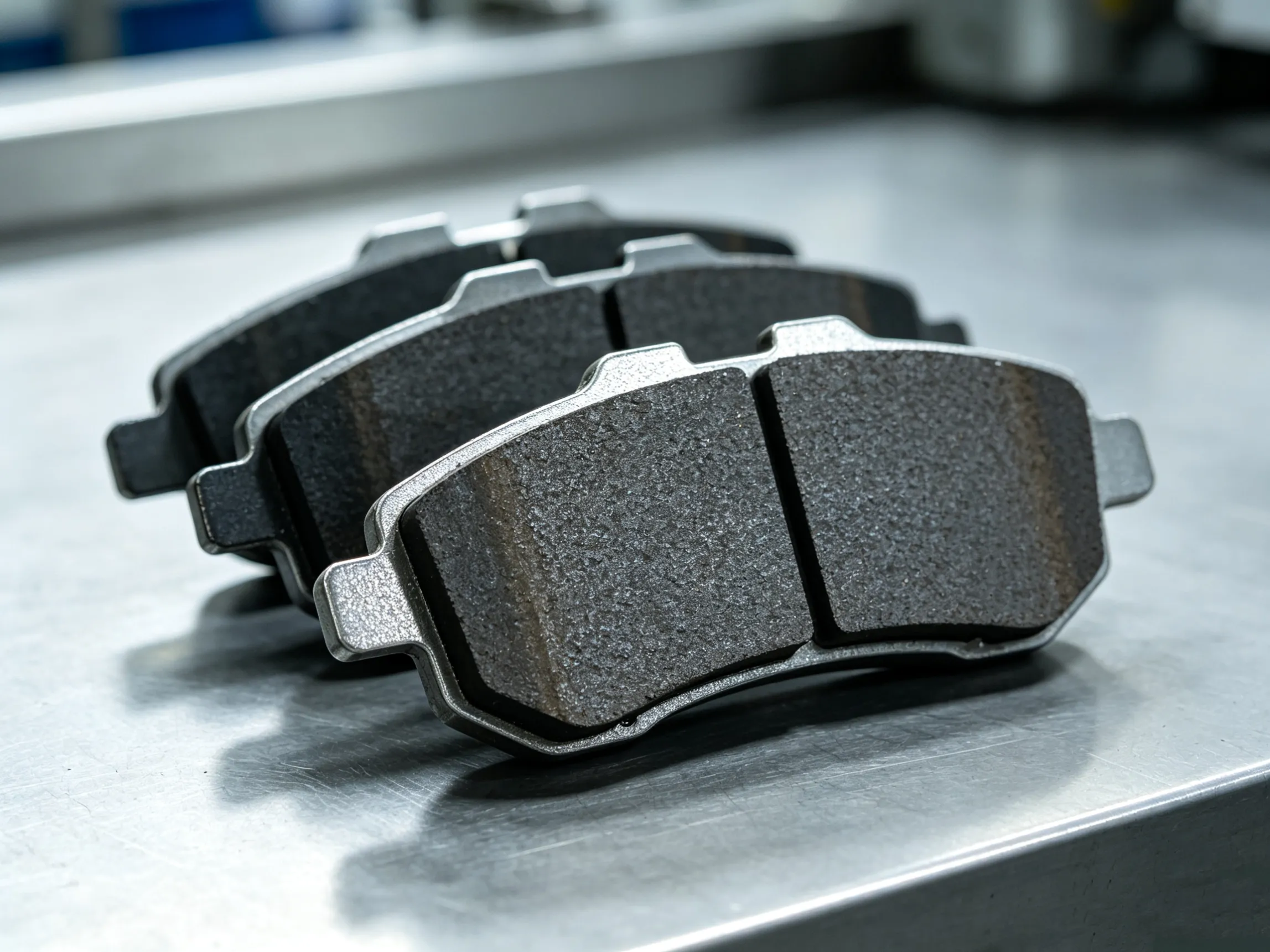
If you are sourcing brake pads from China for wholesale or retail, one of the first decisions you will face is choosing between ceramic and semi-metallic brake pads. The material you pick directly affects your customers' satisfaction, your return rates, and your profit margins.
This guide breaks down the real-world differences — no marketing fluff, just what you need to know as an importer.
What Are Ceramic Brake Pads?
Ceramic brake pads are made from a blend of ceramic fibers, non-ferrous filler materials, and small amounts of copper or other metals. They were originally developed for passenger cars in the 1980s and have since become the go-to choice for daily drivers in North America, Europe, and parts of Asia.
Key Characteristics
- Low noise: Ceramic pads produce very little noise during braking, which end users love. Learn more about brake noise types and solutions.
- Low dust: They generate light-colored, less visible dust that does not stick to alloy wheels.
- Consistent performance: They perform reliably across a wide temperature range, from city driving to moderate highway speeds.
- Longer lifespan: Ceramic pads typically last longer than organic pads and comparable to semi-metallic in normal driving conditions.
- Higher price point: Raw material and manufacturing costs are higher, which means a higher wholesale price — but also higher retail margins.
Best Markets for Ceramic Brake Pads
- North America (USA, Canada) — ceramic is the dominant aftermarket choice
- Europe — growing demand, especially for premium passenger vehicles
- Australia and New Zealand
- Middle East (urban markets with luxury vehicles)
What Are Semi-Metallic Brake Pads?
Semi-metallic brake pads contain 30–65% metal content (steel, iron, copper) mixed with graphite, friction modifiers, and binding resins. They have been the industry workhorse for decades and remain the most common type globally.
Key Characteristics
- Strong stopping power: Semi-metallic pads offer excellent friction performance, especially under heavy braking and high temperatures.
- Heat dissipation: The metal content conducts heat away from the rotor effectively, reducing the risk of brake fade and rotor warping during sustained use.
- More noise and dust: They tend to be noisier and produce darker, more visible metallic dust compared to ceramic.
- Rotor wear: The harder metal content can cause slightly more rotor wear over time. Watch for these signs that your brake discs need replacement.
- Lower cost: They are cheaper to manufacture, making them attractive for price-sensitive markets.
Best Markets for Semi-Metallic Brake Pads
- Africa — price-sensitive markets with high demand for durable, affordable parts
- Southeast Asia — tropical climates with mixed driving conditions
- South America — cost-conscious importers with heavy-duty vehicle fleets
- Commercial vehicles and trucks worldwide — semi-metallic dominates in heavy-duty applications
Head-to-Head Comparison
Feature | Ceramic | Semi-Metallic |
|---|---|---|
Noise Level | Very low | Moderate to high |
Dust | Low, light-colored | Higher, dark metallic |
Braking Performance (Normal) | Excellent | Excellent |
Braking Performance (Heavy/High Speed) | Good | Excellent |
Heat Tolerance | Good | Excellent |
Rotor Friendliness | Very good | Moderate |
Lifespan (Daily Driving) | Long | Moderate to long |
Price (Wholesale) | Higher | Lower |
Best For | Passenger cars, premium markets | All vehicles, price-sensitive markets |
How to Decide: A Practical Framework for Importers
Choose Ceramic If:
- Your target market is North America, Europe, or Australia
- Your customers drive passenger cars and sedans
- Your buyers value low noise and clean wheels
- You want to position your brand as premium
- You can absorb a 20–40% higher unit cost
Choose Semi-Metallic If:
- Your target market is Africa, Southeast Asia, or South America
- Your customers drive SUVs, trucks, vans, or commercial vehicles
- Price competitiveness is your top priority
- You need a product that handles extreme heat and heavy loads
- You are entering the market with a budget-friendly product line
Or Import Both
Many successful importers carry both types and offer them as different product tiers. This lets you:
- Serve a wider range of vehicles and customer preferences
- Upsell ceramic as a premium upgrade
- Compete on price with semi-metallic for budget-conscious buyers
Quality Factors That Matter More Than Material
Whether you choose ceramic or semi-metallic, these quality indicators matter more than the material label:
Friction Coefficient
Look for a stable friction coefficient between 0.35 and 0.45 for passenger cars. Too low means weak braking; too high means harsh noise and rotor damage.
Heat Fade Resistance
Ask your supplier for fade test data. Good brake pads should maintain at least 60% of their friction coefficient after repeated high-temperature stops.
Compressibility
The pad material should compress uniformly under pressure. Poor compressibility leads to uneven wear and pedal vibration.
Shear Strength
The friction material must stay bonded to the backing plate. Low shear strength means the pad can delaminate — a serious safety failure.
ECE R90 or Equivalent Certification
If you are importing to Europe, ECE R90 is mandatory. For Africa, SONCAP certification may be required (Nigeria). Always verify the regulatory requirements for your target market before placing an order. Read our complete guide to brake pad certifications.
Sourcing Tips from a Chinese Manufacturer's Perspective
As a brake pad supplier based in Dongguan, China, here is what we see in the market:
- Ceramic pads are increasingly popular in export orders, especially for the US and EU markets. The technology is mature and Chinese manufacturers have significantly improved quality in the past 5 years.
- Semi-metallic pads remain the volume leader for Africa and Southeast Asia. The price-to-performance ratio is hard to beat.
- MOQ varies: Ceramic pads usually have a higher MOQ (500–1000 sets per SKU) due to more complex formulations. Semi-metallic MOQ can be as low as 200–300 sets.
- Lead time: Standard orders take 25–35 days. Custom formulations or packaging may add 7–15 days.
- Samples always first: Never place a bulk order without testing samples. A good supplier will provide 2–5 sets of samples for quality verification.
Frequently Asked Questions
Are ceramic brake pads worth the extra cost?
For passenger car applications in developed markets, yes. Customers expect quiet, clean braking and are willing to pay more. For heavy-duty or price-sensitive markets, semi-metallic offers better value.
Can I use ceramic brake pads on trucks and commercial vehicles?
Ceramic pads are available for some light trucks and SUVs, but semi-metallic is the standard for heavy commercial vehicles. The metal content handles the extreme heat and weight better.
What certifications do I need to import brake pads?
It depends on your market. Europe requires ECE R90. Nigeria requires SONCAP. The US has no federal certification mandate but DOT standards apply. Always check local regulations before ordering. See our detailed certification guide.
How do I verify brake pad quality before placing a bulk order?
Request samples, check for ECE or equivalent certifications, ask for test reports (friction, fade, shear), and if possible, visit the factory or hire a third-party inspection service. Read our complete quality inspection guide.
Conclusion
The ceramic vs semi-metallic debate does not have a single winner — it depends on your market, your customers, and your business strategy. Ceramic pads command higher prices and suit premium markets. Semi-metallic pads dominate in volume and price-sensitive regions.
The smartest approach? Know your market, test the samples, and choose a supplier who can deliver consistent quality at your target price point.
Browse our brake pad products or contact us for product inquiries, sample requests, or custom orders.
Looking for more brake pad knowledge? Read our guides on brake pad materials explained, brake pad certifications, and quality control for importers.