
Sep 8, 2026Product Knowledge
Brake Pad Shims and Hardware: The Overlooked Components That Matter
Discover why brake pad shims and hardware are critical for noise reduction, performance, and safety. Learn about shim types, anti-rattle clips, and how quality hardware improves braking.
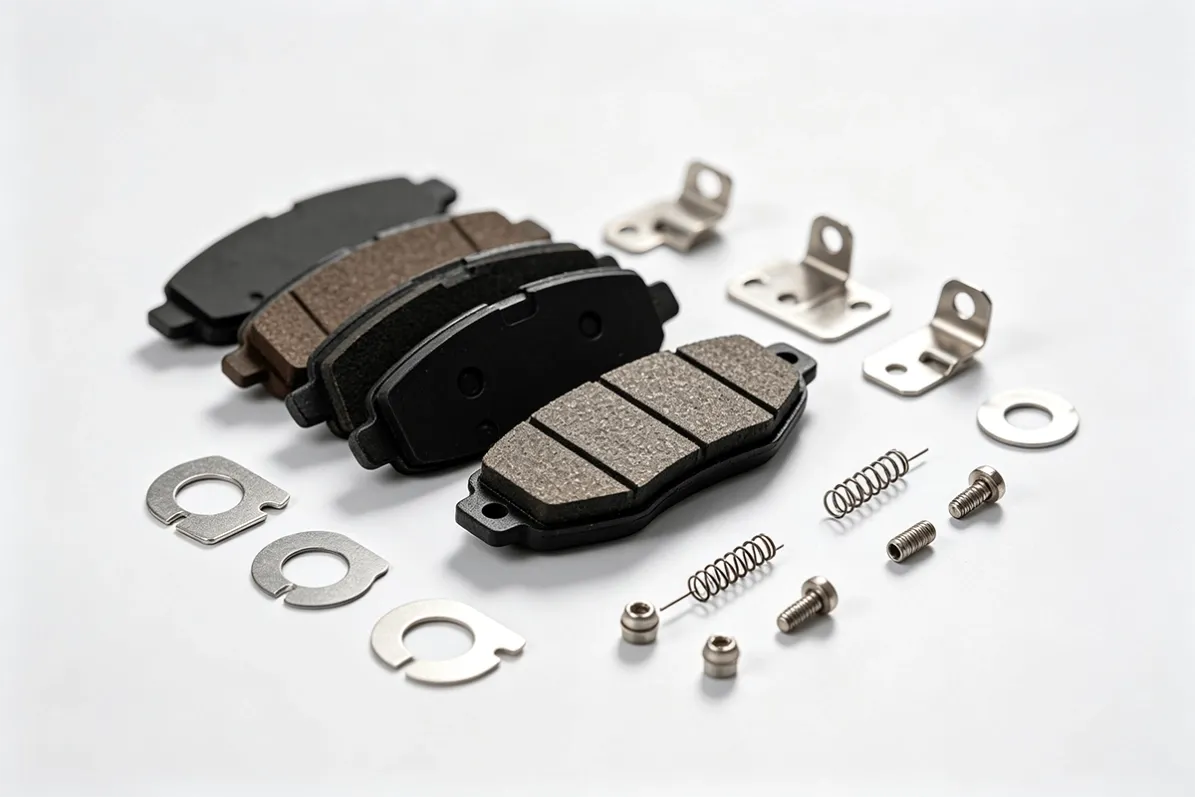
What Are Brake Pad Shims and Why Do They Matter?
When buyers think about brake pads, they focus on the friction material — ceramic, semi-metallic, or NAO compounds. But there is a critical component that is often overlooked: the shim. A brake pad shim is a thin layer of material attached to the back of the brake pad backing plate. It sits between the pad and the caliper piston, and its role is far more important than most people realize.
Shims are not just decorative accessories. They directly affect noise levels, vibration damping, heat transfer, and overall braking comfort. For auto parts buyers serving markets where customer satisfaction depends on quiet, smooth braking — particularly in Europe, the Middle East, and premium segments in Southeast Asia — understanding shims and hardware is essential product knowledge.
How Brake Pad Shims Work
The primary function of a shim is noise reduction. When brake pads press against the rotor, high-frequency vibrations are generated. These vibrations travel through the backing plate and amplify into the audible squeal that drivers hate. A shim acts as a vibration damper, absorbing these vibrations before they reach the caliper and become audible.
Shims also serve as a thermal barrier. They reduce heat transfer from the friction surface to the caliper piston and brake fluid. Excessive heat reaching the brake fluid can cause fluid boil and brake fade, which is a serious safety concern. High-quality shims help maintain consistent brake fluid temperatures during heavy braking.
Additionally, shims provide a precision fit between the pad and caliper. They fill tiny gaps that would otherwise allow the pad to rattle or move loosely within the caliper. This anti-rattle function eliminates clicking and knocking sounds during braking and driving over rough surfaces.
Types of Brake Pad Shims
Rubber-Coated Steel Shims
The most common type. A thin steel plate with a rubber or elastomer coating on one or both sides. The rubber layer provides vibration damping while the steel provides structural support. These shims are effective for general noise reduction and are widely used in passenger car applications.
Multi-Layer Shims
Premium shims consist of multiple layers — typically steel, adhesive, rubber, and sometimes a slip layer. Each layer serves a specific function: structural support, vibration damping, and controlled friction between the shim and piston. Multi-layer shims offer superior noise reduction and are found in high-end brake pad sets.
NBR (Nitrile Butadiene Rubber) Shims
Made from NBR rubber, these shims offer excellent resistance to brake fluid, oil, and heat. They are commonly used in applications where chemical resistance is important. NBR shims maintain their damping properties across a wide temperature range.
Ceramic-Coated Shims
Some premium brake pads feature shims with a ceramic coating on the friction surface. This coating reduces friction between the shim and piston, allowing the pad to move more freely within the caliper. The result is smoother, more consistent braking feel.
Anti-Rattle Clips and Springs
Beyond shims, brake pad hardware includes several other critical components:
Anti-Rattle Clips
These small metal clips hold the brake pad in place within the caliper bracket. They apply controlled pressure to the pad, preventing it from rattling or moving when the brakes are not applied. Worn or missing anti-rattle clips are a common cause of brake noise complaints.
Pad Retaining Springs
Some brake designs use springs instead of clips to retain the pads. These springs apply constant pressure to keep the pads seated against the caliper. They must maintain their tension over time — a weakened spring allows pad movement and noise.
Wear Indicators
Most modern brake pads include a metal wear indicator — a small tab that contacts the rotor when the pad material reaches its minimum thickness. This produces a high-pitched squeal that alerts the driver to replace the pads. Quality wear indicators are precisely calibrated to activate at the correct thickness.
Abutment Clips
These clips sit in the caliper bracket slots and provide a smooth, corrosion-resistant surface for the brake pad ears to slide on. They ensure the pad can move freely during braking and retract properly when the pedal is released.
Why Hardware Quality Matters
The difference between a premium brake pad set and a cheap one often comes down to hardware quality. Here is what happens with low-quality shims and hardware:
Noise problems: Thin, poorly made shims fail to damp vibrations effectively. Customers complain about squealing brakes within weeks of installation. This leads to returns, warranty claims, and damaged reputation.
Uneven pad wear: Hardware that does not hold the pad correctly causes uneven contact with the rotor. One side of the pad wears faster than the other, reducing pad life and braking performance.
Corrosion and deterioration: Low-grade metal clips rust quickly, especially in humid or coastal environments. Rusted hardware binds the pad, preventing proper movement and causing uneven wear.
Heat damage: Cheap shims with poor thermal properties allow excessive heat transfer to the caliper, potentially damaging seals and causing brake fluid degradation.
For importers and distributors, selling brake pad sets with quality hardware means fewer customer complaints, fewer warranty claims, and stronger brand reputation.
How to Evaluate Brake Pad Hardware Quality
When sourcing brake pads, pay attention to these hardware details:
1. Shim thickness and material: Feel the shim — it should be firm but have some flexibility. Multi-layer shims feel different from single-layer rubber-coated ones.
2. Clip spring tension: Gently press the anti-rattle clip — it should snap back firmly. Weak clips will not hold the pad properly.
3. Coating quality: Check for even, durable coatings on clips and hardware. Flaking or uneven coatings indicate poor quality.
4. Completeness: A complete brake pad set should include all necessary hardware — shims, clips, springs, and wear indicators. Some cheap sets omit hardware to reduce costs.
5. Packaging: Quality hardware is packaged separately to prevent damage during shipping. Loose hardware rattling around in a box is a red flag.
OEM vs Aftermarket Hardware
OEM brake pad sets typically include hardware that matches the original vehicle specifications exactly. Aftermarket sets may use generic hardware that fits but does not perform as well. For premium customers, OEM-equivalent hardware is important.
When sourcing aftermarket brake pads, ask the supplier about their hardware specifications. Do they use the same clip dimensions and spring tension as the OE parts? Can they provide hardware that matches specific vehicle requirements?
Contact Us for Quality Brake Pad Sets with Complete Hardware
At YQF Auto Parts, every brake pad set we supply includes complete hardware — shims, anti-rattle clips, wear indicators, and abutment clips. Our hardware meets or exceeds OE specifications, ensuring quiet, reliable braking for your customers.
We offer carbon ceramic brake pads with premium multi-layer shims for noise-sensitive markets, and cost-effective sets with quality hardware for price-competitive segments. Request our product catalog and hardware specifications by contacting us or emailing yqf@chenchat.top.