Sep 9, 2026Buying Guides
Brake Fluid Flush Cost Analysis: What Importers and Distributors Should Know
Learn brake fluid flush costs, DOT types, and how importers can source quality brake fluid from China for global distribution markets.
Why Brake Fluid Flush Is a Profitable Add-On for Auto Parts Distributors
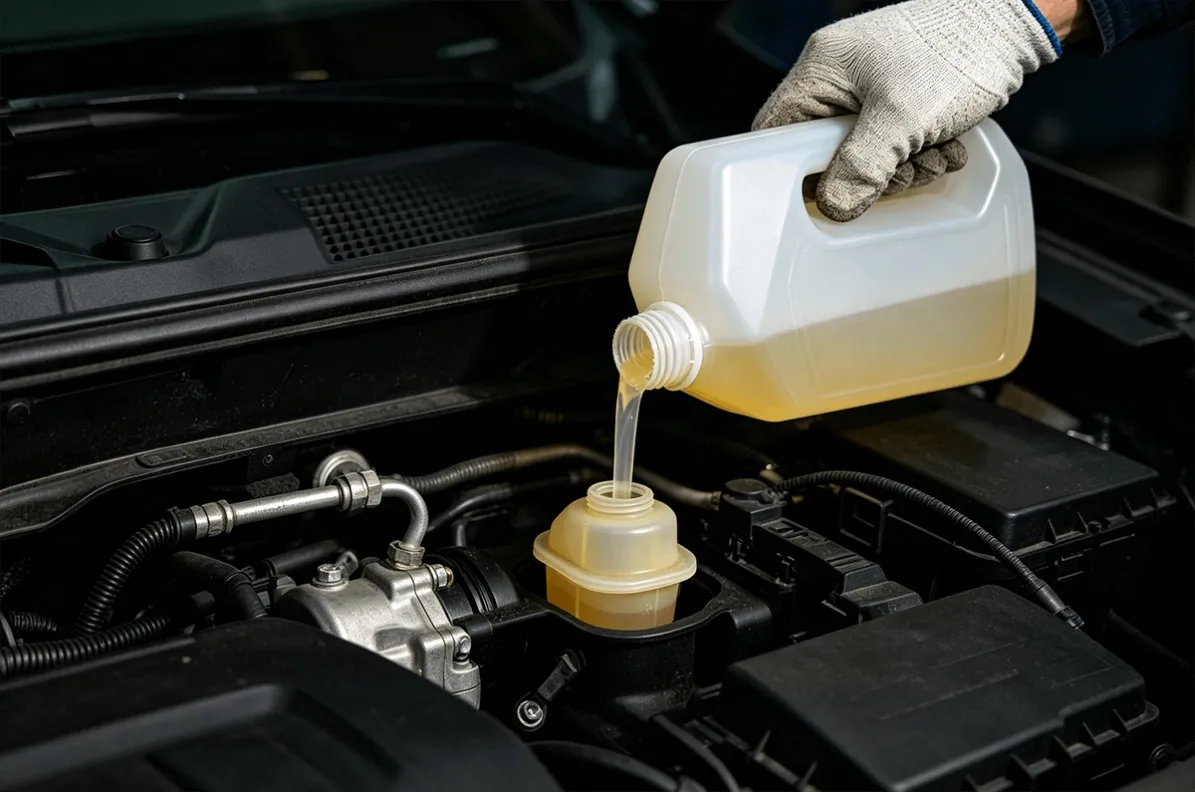
Brake fluid flush is one of the most frequently recommended maintenance services worldwide. For auto parts importers and distributors, understanding the cost structure behind this service opens a new revenue stream. Every vehicle on the road needs periodic brake fluid replacement, making it a consistent, high-demand product category that complements brake pads and rotors.
The global brake fluid market is growing steadily, driven by aging vehicle fleets and stricter safety regulations. Whether you serve African, Southeast Asian, Middle Eastern, or European markets, brake fluid is a product your customers already buy. The question is whether you are capturing that demand with the right product range and pricing strategy.
How Much Does a Brake Fluid Flush Really Cost
The cost of a brake fluid flush varies significantly depending on the market, vehicle type, and fluid specification. In developed markets, a professional brake fluid flush typically costs between thirty and ninety US dollars for labor alone, with fluid adding another ten to twenty dollars. In emerging markets, the service may cost half as much, but the volume of vehicles needing service is far greater.
For distributors, the real cost comparison should be between sourcing locally and importing from China. Chinese brake fluid manufacturers produce DOT 3, DOT 4, DOT 5.1, and specialty formulations at competitive factory prices. When you factor in bulk purchasing power, the landed cost per liter can be significantly lower than buying from regional wholesalers.
DOT 3 vs DOT 4 vs DOT 5.1: What Your Customers Need
Understanding brake fluid specifications helps you recommend the right product to different customer segments. DOT 3 is the most common and affordable option, suitable for most passenger vehicles. DOT 4 has a higher boiling point and is preferred for performance vehicles and heavier braking systems. DOT 5.1 is a high-performance glycol-based fluid used in racing and heavy-duty applications.
DOT 5 silicone-based fluid is not compatible with DOT 3, 4, or 5.1 systems and is rarely used in mainstream vehicles. For importers targeting the global aftermarket, stocking DOT 3 and DOT 4 covers the vast majority of demand. DOT 5.1 can be a premium add-on for specialized customers.
How to Source Brake Fluid from China
Chinese brake fluid manufacturers are concentrated in Guangdong, Zhejiang, and Shandong provinces. Many hold ISO 9001 and ISO/TS 16949 certifications, which are essential for supplying to professional workshops and dealerships. When evaluating suppliers, request product samples and independent test reports to verify boiling point, viscosity, and corrosion protection claims.
MOQ for brake fluid is typically lower than for brake components, often starting at five hundred liters for standard formulations. Packaging options include retail bottles, bulk drums, and private-label packaging. Working with a supplier who offers flexible MOQ and custom packaging helps you test new markets without overcommitting capital.
Brake Fluid Flush Cost by Market Region
Cost structures differ by region, and understanding these differences helps you set competitive wholesale pricing. In African markets, where vehicle fleets are older and maintenance intervals are longer, brake fluid flush services are growing as awareness of safety increases. In Southeast Asia, the tropical climate accelerates brake fluid degradation, creating frequent replacement demand. In Middle Eastern markets, extreme heat conditions push brake fluid to its boiling limits, making high-performance DOT 4 products more attractive.
For European markets, brake fluid flush is often a mandatory inspection item during annual vehicle safety checks. This regulatory requirement creates a stable, predictable demand pattern that importers can plan around. Understanding local regulations helps you position the right product at the right price point.
Quality Control for Brake Fluid Import
Brake fluid is a safety-critical product, and quality failures can have serious consequences. Before placing bulk orders, verify that the manufacturer test reports cover dry boiling point, wet boiling point, viscosity at minus forty degrees, and copper strip corrosion. These are the core parameters that professional workshops and regulatory bodies check.
Request a pre-shipment inspection through a third-party testing service if you are ordering for the first time. This small investment protects your reputation and prevents costly returns. Reliable Chinese suppliers will welcome third-party verification as a sign of professionalism.
Contact Us
Ready to source brake fluid from China? YQF Auto Parts offers a full range of DOT 3, DOT 4, and DOT 5.1 brake fluid with flexible MOQ, custom packaging, and quality certifications. Contact us at yqf@chenchat.top or visit our contact page to discuss your requirements.