Aug 25, 2026Buying Guides
How to Choose a Reliable Brake Parts Supplier in China: A Buyer’s Guide
A practical guide for importers on checking Chinese brake parts suppliers, quality systems, samples, certifications, total cost, and order control.
How to Choose a Reliable Brake Parts Supplier in China: A Buyer’s Guide
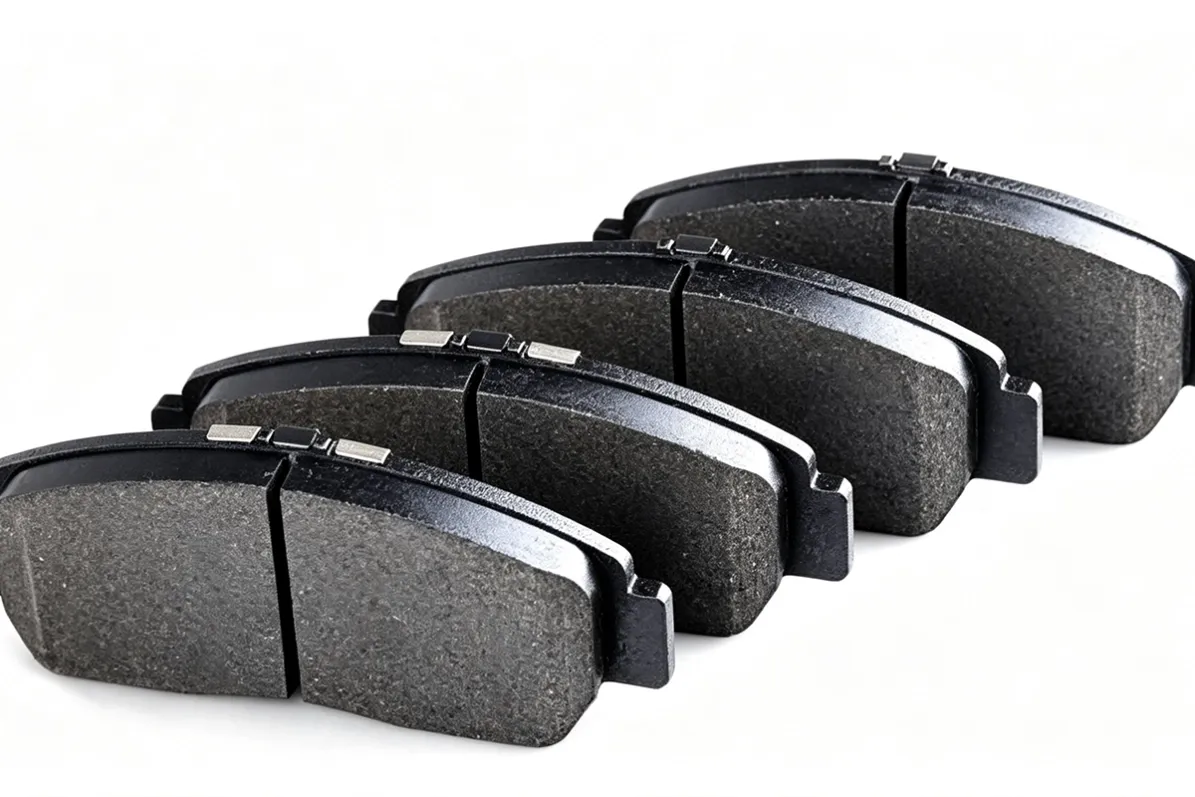
Finding a reliable brake parts supplier in China is not simply a matter of comparing the lowest quotation. For importers, wholesalers, and distributors, the right supplier must combine stable quality, accurate fitment data, production capacity, export experience, and responsive communication.
This guide explains how to evaluate a Chinese supplier before placing a brake pad or brake disc order. It is written for buyers who want fewer quality claims, smoother customs clearance, and a dependable long-term supply chain.
1. Define Your Product and Market Requirements First
Before contacting suppliers, prepare a clear sourcing brief. Include the product category, target vehicle applications, OE numbers, required materials, expected order quantity, destination market, packaging requirements, and applicable certifications.
For brake pads, specify the friction material, backing plate requirements, wear indicators, shims, accessories, and preferred noise and dust performance. For brake discs, specify diameter, thickness, height, center bore, bolt pattern, casting material, balancing tolerance, and whether you need coated surfaces.
A precise brief makes supplier quotations easier to compare. It also helps prevent a supplier from offering a similar-looking part that does not fit the intended vehicle.
2. Check the Supplier’s Product Focus and Factory Capability
A supplier that sells every type of auto part may not have deep experience with braking products. Ask how long the company has produced brake pads or brake discs, which applications are its strongest, and whether production is handled in-house or outsourced.
Useful questions include:
- What are your main brake pad and brake disc product lines?
- Which countries do you currently export to?
- What is your monthly production capacity for the requested items?
- Can you provide product drawings, OE cross-reference numbers, and fitment data?
- Which processes are controlled in-house?
A capable supplier should answer with specific information rather than general marketing language. Product photos alone cannot prove manufacturing capability.
3. Verify Quality Management and Testing
Brake components are safety-related products, so quality control should be documented. Ask for the supplier’s quality certificates, inspection procedures, and sample test reports. Depending on your market, relevant evidence may include ISO 9001, IATF 16949, ECE R90 approval, or other required standards.
For brake pads, review tests related to friction coefficient, compressibility, shear strength, wear, noise, and high-temperature performance. For brake discs, ask about material hardness, dimensional inspection, dynamic balance, runout, thickness variation, and corrosion protection.
Certificates should be checked for the legal company name, certificate scope, issuing body, and validity period. A logo printed on a brochure is not the same as a verifiable certificate.
4. Request Samples and Inspect Fitment
Never judge a brake supplier only from a catalog or a low price. Order samples from the exact production line that would manufacture your bulk order. Check the dimensions against the drawing and verify the OE number and vehicle application.
Inspect the following points:
- Surface finish and visible defects
- Markings, labels, and traceability information
- Packaging strength and moisture protection
- Pad chamfers, slots, shims, and accessories
- Disc thickness, vent design, coating coverage, and balance
- Match between the physical part and the supplied data
If possible, have an experienced workshop or independent laboratory inspect and test the sample. A sample approval process reduces the risk of receiving a different product after the deposit is paid.
5. Compare the Total Cost, Not Just the Unit Price
The cheapest quotation may become the most expensive option after freight, returns, relabeling, warranty claims, and lost customers are included. Compare the complete landed cost and the likely cost of quality problems.
Your comparison should include:
- Product price and tooling charges
- Packaging and labeling costs
- Minimum order quantity
- Inspection and testing fees
- Freight, insurance, and export documentation
- Warranty terms and replacement policy
- Lead time and payment conditions
A reliable supplier should explain what is included in the quotation and identify possible extra charges before you place the order.
6. Evaluate Communication and Order Control
Communication quality is an operational issue, not a cosmetic advantage. During the quotation and sampling stage, observe whether the supplier answers technical questions clearly, confirms specifications in writing, and reports problems promptly.
Before mass production, confirm a purchase specification covering product numbers, drawings, materials, packaging, labels, quantity, delivery date, and inspection requirements. Ask for production photos or a pre-shipment inspection when appropriate.
Avoid changing critical specifications through informal messages only. A written record protects both sides when an order contains many vehicle applications.
7. Watch for Common Red Flags
Be cautious when a supplier:
- Refuses to provide a legal company name or factory address
- Gives inconsistent OE numbers or fitment information
- Offers a price far below the market without explaining why
- Cannot provide samples from the stated product line
- Uses certificates belonging to another company
- Pressures you to pay quickly before specifications are confirmed
- Changes packaging, materials, or lead time without written approval
One warning sign may have an innocent explanation, but several together indicate that a deeper verification is necessary.
8. Build a Supplier Relationship in Stages
A practical sourcing process starts with samples, continues with a small trial order, and expands only after quality and delivery performance are proven. Keep records of inspection results, complaints, corrective actions, and repeat-order consistency.
For a new importer, it is safer to develop a focused range of high-demand applications than to order hundreds of part numbers at once. Once the supplier demonstrates stable performance, you can discuss private labeling, regional exclusivity, forecast planning, and customized packaging.
FAQ: Buying Brake Parts from China
How do I verify a brake parts supplier in China?
Check the company’s legal information, factory capability, product certificates, export history, sample quality, and inspection records. Confirm that the certificate holder matches the supplier that will receive your order.
What is a reasonable minimum order quantity?
There is no universal number. MOQ depends on the part number, packaging, tooling, and whether the product is standard or customized. Ask for both a trial-order MOQ and a regular bulk-order MOQ.
Should I use a third-party inspection company?
For a new supplier or a large order, independent pre-shipment inspection is a sensible risk-control measure. It is especially useful when you cannot visit the factory yourself.
What should be written into the purchase order?
Include exact part numbers, OE references, drawings, materials, tolerances, packaging, labels, quantity, delivery date, inspection standard, and the procedure for handling non-conforming products.
Conclusion
The best brake parts supplier is not necessarily the one with the lowest initial price. It is the supplier that can repeatedly deliver the correct part, at the agreed quality, with complete documentation and reliable communication.
YQFDG supplies brake pads, brake discs, and related automotive components for international buyers. To understand how product specifications should be checked, read our guide on how to choose the right brake disc. You can also review our article on brake pad certifications for export buyers before preparing your sourcing list.