
Aug 16, 2026Product Knowledge
How Long Do Brake Pads Last? A Complete Lifespan Guide for Car Owners and Parts Buyers
Learn how long brake pads last, what affects their lifespan, and when to replace them. Essential guide for car owners, mechanics, and auto parts buyers.
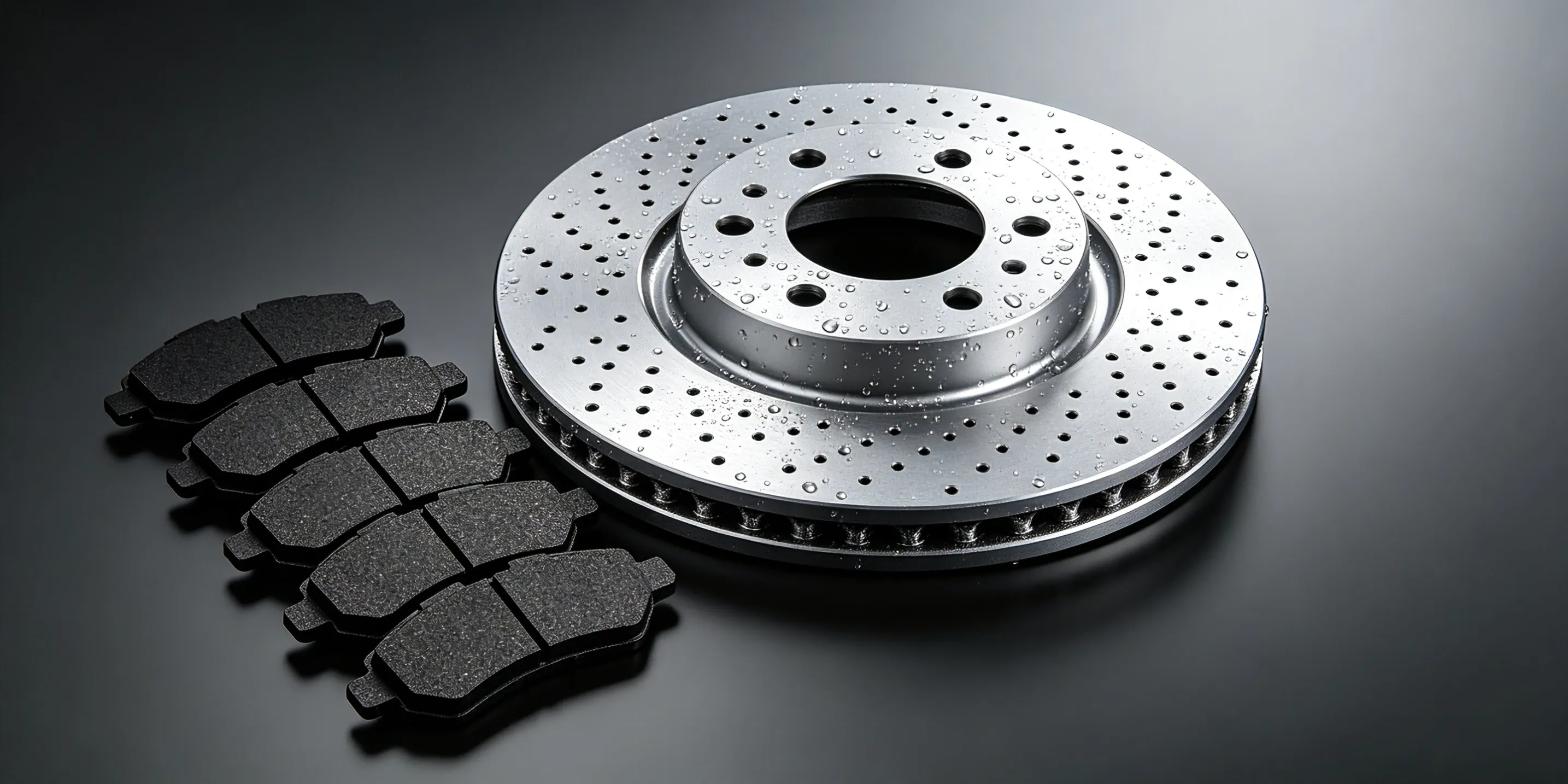
How Long Do Brake Pads Last? A Complete Lifespan Guide for Car Owners and Parts Buyers
Brake pads are one of the most frequently replaced components in any vehicle. Whether you are a car owner wondering when to schedule your next service, or an auto parts buyer stocking inventory for your market, understanding brake pad lifespan is essential.
This guide covers everything you need to know: average lifespan, factors that affect wear, signs of replacement, and tips to make brake pads last longer.
How Long Do Brake Pads Typically Last?
On average, brake pads last between 30,000 and 70,000 kilometers (approximately 20,000 to 50,000 miles). However, this range varies widely depending on several factors:
Carbon Ceramic: 40,000 - 70,000 km. Best for daily driving, city commuting, comfort-focused use.
Semi-Metallic: 30,000 - 50,000 km. Best for heavy-duty use, commercial vehicles, and towing.
NAO (Non-Asbestos Organic): 25,000 - 40,000 km. Best for light vehicles and budget-conscious markets.
Carbon ceramic brake pads generally last the longest because they produce less friction heat and cause less wear on both the pad and the brake rotor. This is one reason they are becoming the preferred choice for passenger cars worldwide.
7 Factors That Affect Brake Pad Lifespan
- Driving Style
This is the single biggest factor. Aggressive driving with hard braking can cut brake pad life by 50% or more. Smooth, anticipatory driving, where you coast to slow down before applying brakes, can significantly extend pad life.
Tip for African and Southeast Asian markets: In cities like Lagos, Bangkok, or Jakarta with heavy traffic and frequent stop-and-go driving, brake pads wear faster. Recommend carbon ceramic pads to your customers for longer life in these conditions.
- Driving Environment
City driving means more frequent braking and faster wear. Highway driving means less braking and longer pad life. Mountain and hilly terrain with constant downhill braking wears pads quickly. Dusty and sandy roads, common in parts of Africa and the Middle East, have abrasive particles that accelerate wear. Hot and humid climates in Southeast Asia can also affect pad performance.
- Vehicle Weight
Heavier vehicles require more braking force, which wears pads faster. Compact cars like the Toyota Corolla and Honda City enjoy longer pad life. SUVs and trucks like the Toyota Prado and Hilux have shorter pad life. Commercial vehicles have the shortest pad life due to constant heavy use.
- Brake Pad Material
Carbon ceramic pads offer the longest life and are gentlest on rotors. Semi-metallic pads provide good durability but are harder on rotors. NAO organic pads have the shortest life as the softest compound.
- Quality of the Brake Pad
Not all brake pads are created equal. Low-quality pads may use inferior friction materials that wear out quickly or unevenly. Look for ECE R90 certification, which is the European standard for brake pad performance. Also look for IATF 16949 certification, which covers quality management for automotive production. A consistent friction coefficient ensures even wear across the pad surface.
- Brake Rotor Condition
Worn or warped rotors can cause uneven brake pad wear. Always inspect rotors when replacing pads. If rotors are grooved, scored, or below minimum thickness, replace them together with the pads.
- Climate and Weather
Rain and humidity can cause surface rust on rotors, affecting pad wear. Extreme heat accelerates pad material breakdown. In cold climates, brake pads may take longer to reach optimal operating temperature.
5 Signs Your Brake Pads Need Replacement
- Squealing or Screeching Noise
A high-pitched squeal when braking is the most common indicator. Most brake pads have a built-in wear indicator, which is a small metal tab that contacts the rotor when the pad material is low, creating this sound.
- Grinding Noise
If you hear a metal-on-metal grinding sound, your brake pads are completely worn through. The metal backing plate is now contacting the rotor directly. This requires immediate attention, as continuing to drive can damage the rotors and create a safety hazard.
- Longer Stopping Distance
If your car takes longer to stop than usual, your brake pads may be worn thin. This is especially dangerous in emergency situations.
- Brake Warning Light
Many modern vehicles have a dashboard warning light that illuminates when brake pads reach a certain wear level. Do not ignore this warning.
- Visual Inspection
You can often see brake pads through the wheel spokes. If the friction material looks thinner than 3mm (about the thickness of a penny), it is time to replace them.
How to Make Brake Pads Last Longer
For Car Owners:
Drive smoothly and anticipate stops to brake gradually. Avoid riding the brakes by not keeping your foot on the brake pedal while driving. Maintain proper tire pressure, as under-inflated tires increase braking distance and pad wear. Do regular inspections by checking brake pads every 10,000 km or during oil changes. Use quality pads by investing in certified brake pads from reputable manufacturers.
For Auto Parts Buyers and Distributors:
Stock carbon ceramic pads because they last longer, which means happier customers and fewer warranty claims. Educate your customers by sharing this guide with them to build trust and expertise. Offer both options by stocking semi-metallic for heavy-duty and commercial customers, and carbon ceramic for passenger cars. Keep popular sizes ready by focusing on high-demand part numbers like D1210, D1354, D1521, D536, and D787. Provide warranty, as quality manufacturers offer warranty on their products.
Brake Pad Lifespan by Region
Different markets have different driving conditions that affect brake pad life.
West Africa (Nigeria, Ghana): Hot, dusty, heavy traffic conditions. Expected lifespan is 25,000 - 40,000 km. Recommended material is semi-metallic or carbon ceramic.
East Africa (Kenya, Tanzania): Mixed terrain with some hills. Expected lifespan is 30,000 - 45,000 km. Recommended material is carbon ceramic.
South Africa: Highway and city mix. Expected lifespan is 35,000 - 55,000 km. Recommended material is carbon ceramic.
Southeast Asia (Thailand, Vietnam): Hot, humid, city traffic. Expected lifespan is 30,000 - 45,000 km. Recommended material is carbon ceramic for low dust.
Middle East: Extreme heat and desert dust. Expected lifespan is 25,000 - 40,000 km. Recommended material is semi-metallic.
Frequently Asked Questions
Can I just replace the front brake pads and not the rear?
Front brake pads wear faster because about 70% of braking force comes from the front. It is common to replace front pads 2-3 times before the rear pads need replacement. However, always inspect both and replace as needed.
Should I replace rotors every time I replace brake pads?
Not always. If rotors are within specification (above minimum thickness, no deep grooves or warping), they can be reused. However, many mechanics recommend replacing or resurfacing rotors with every other pad change for optimal performance.
What is the difference between cheap and premium brake pads?
Premium brake pads use higher-quality friction materials that provide more consistent stopping power, lower noise and dust, longer lifespan, better performance in extreme conditions, and relevant certifications like ECE R90.
How many kilometers do Toyota brake pads last?
Toyota OEM brake pads typically last 40,000 - 60,000 km under normal driving conditions. Aftermarket carbon ceramic pads from quality manufacturers can match or exceed this lifespan.
Do ceramic brake pads last longer than semi-metallic?
Yes, generally. Carbon ceramic brake pads typically last 40,000 - 70,000 km, while semi-metallic pads last 30,000 - 50,000 km. Ceramic pads are also gentler on brake rotors, which can save money on rotor replacement over time.
Conclusion
Brake pad lifespan depends on many factors. Driving style, environment, vehicle weight, and material quality all play a role. For most drivers, carbon ceramic brake pads offer the best combination of longevity, comfort, and performance.
If you are an auto parts buyer looking for reliable, long-lasting brake pads for your market, we can help. YQF Auto Parts supplies carbon ceramic brake pads for Toyota, Honda, Hyundai, Kia, and 20+ other brands, all manufactured to ECE R90 standards in our IATF 16949 certified facility.
Need pricing or samples? Contact us or browse our product catalog.