
Aug 16, 2026Product Knowledge
Brake Pads vs Brake Shoes: What's the Difference?
Brake pads and brake shoes are not the same thing. Learn the key differences in design, function, performance, and which your vehicle uses — essential knowledge for car owners and auto parts buyers.
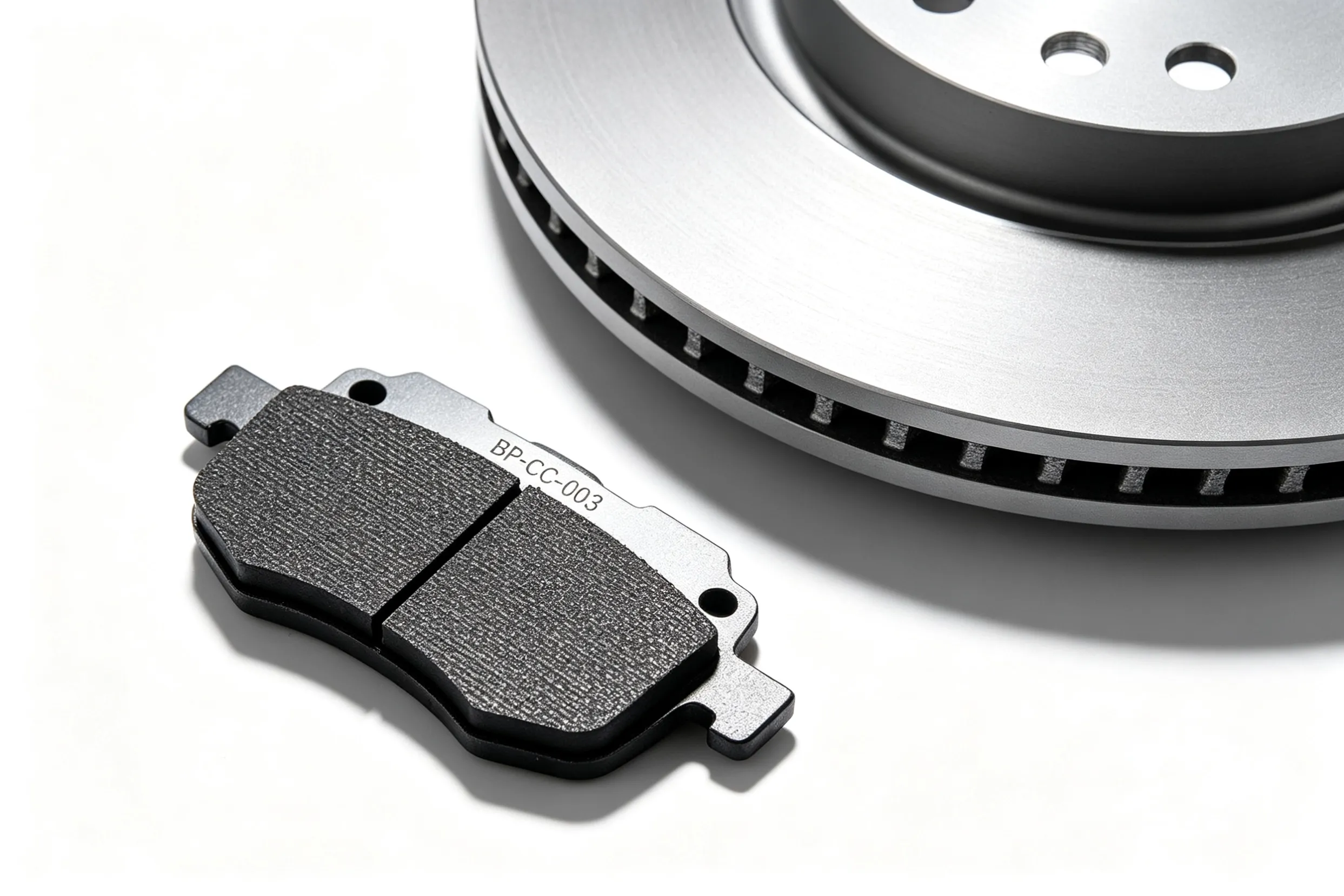
"I need brake pads for my car." Sounds simple enough — but does your car actually use brake pads, brake shoes, or both? Many car owners and even some parts buyers mix these two up. They serve similar purposes but work in very different ways.
Understanding the difference is important: it helps you order the right parts, explain products to customers, and avoid costly mistakes.
What Are Brake Pads?
Brake pads are the friction components used in disc brake systems. Each pad is a flat plate with friction material bonded to one side. When you press the brake pedal, hydraulic pressure pushes the pads against a spinning metal disc (the rotor), creating friction that slows the wheel.
Key characteristics:
- Flat, rectangular shape
- Friction material on one side of a steel backing plate
- Work by clamping onto a rotor (disc)
- Found on the front wheels of most modern cars, and often all four wheels
Common part numbers for popular vehicles:
- D1210 — Toyota Corolla, RAV4 (front)
- D1521 — Honda CR-V, Civic (front)
- D768 — Volkswagen Jetta, Golf (front)
What Are Brake Shoes?
Brake shoes are the friction components used in drum brake systems. Each shoe is a curved metal piece with friction material on the outer curve. When you press the brake pedal, the shoes are pushed outward against the inside of a spinning drum, creating friction that slows the wheel.
Key characteristics:
- Curved, half-moon shape
- Friction material on the outside of the curved surface
- Work by pressing outward against a drum
- Typically found on the rear wheels of older or budget vehicles
How They Work: Disc vs Drum
Disc Brakes (Brake Pads)
Think of it like a bicycle hand brake. Two pads squeeze a spinning disc from both sides. The clamping force creates friction, which converts kinetic energy into heat and slows the vehicle.
Advantages:
- Better heat dissipation — the rotor is exposed to air
- More consistent braking in wet conditions — water is quickly wiped away
- Easier to inspect and replace
- Better performance at high speeds
- Self-cleaning — debris is pushed away by the rotating disc
Drum Brakes (Brake Shoes)
Think of pressing your hands against the inside of a spinning bowl. The shoes expand outward and press against the inner surface of the drum.
Advantages:
- Lower manufacturing cost
- More friction surface area (the shoe wraps around the drum)
- Self-energizing effect — the rotation helps push the shoes harder against the drum, requiring less pedal effort
- Better parking brake integration — the mechanism holds naturally
Side-by-Side Comparison
Feature | Brake Pads (Disc) | Brake Shoes (Drum) |
|---|---|---|
System | Disc brakes | Drum brakes |
Shape | Flat plate | Curved shoe |
How it works | Clamps onto rotor | Expands against drum |
Heat dissipation | Excellent (open design) | Poor (enclosed) |
Wet performance | Excellent | Reduced |
Ease of inspection | Easy — visible through wheel | Requires drum removal |
Replacement cost | Moderate | Lower |
Lifespan | 30,000–70,000 km | 40,000–100,000 km |
Common position | Front wheels (all cars), rear wheels (higher-end) | Rear wheels (older/budget cars) |
Dust | Moderate to high | Lower (enclosed) |
Fade resistance | Better | Worse under heavy use |
Which Does Your Car Use?
Most modern vehicles use a combination of both:
- Front wheels: Almost always disc brakes (brake pads) — because the front handles 60–70% of braking force and needs better heat management
- Rear wheels: Varies by vehicle type and market:
- Higher-end / performance cars: Disc brakes on all four wheels
- Budget / economy cars: Drum brakes on the rear
- Older vehicles: More likely to have rear drum brakes
How to check without removing the wheel:
- Look through the spokes of your wheel
- If you see a smooth, flat metal disc with a caliper clamping it → disc brakes (brake pads)
- If you see a solid, rounded metal cover with no visible disc → drum brakes (brake shoes)
Common configurations:
Vehicle Type | Front | Rear |
|---|---|---|
Economy cars (older) | Disc | Drum |
Modern sedans | Disc | Disc or Drum |
SUVs and trucks | Disc | Disc or Drum |
Performance / luxury | Disc | Disc |
Commercial trucks | Drum | Drum |
Why This Matters for Auto Parts Buyers
If you're sourcing brake parts for your market, understanding pads vs shoes helps you:
1. Stock the right products
In markets with older vehicle fleets (common in parts of Africa and Southeast Asia), brake shoes may have strong demand alongside brake pads. Don't assume every car needs pads.
2. Avoid order mistakes
A customer asking for "brakes" might mean pads or shoes. Knowing the difference — and which vehicles use which — prevents wrong shipments and returns.
3. Cross-sell opportunities
When a customer orders front brake pads, ask if they also need rear brake shoes. Many vehicles use pads in front and shoes in rear, so both need replacement eventually.
4. Market-specific demand
- Africa: Higher proportion of older vehicles = more drum brakes = strong brake shoe demand
- Southeast Asia: Mix of both; newer fleets are shifting to all-disc
- Middle East: More modern vehicles = mostly disc brakes
Brake Pad and Brake Shoe Materials
Both brake pads and brake shoes come in similar material formulations:
Carbon Ceramic (Pads)
- Longest lifespan, low dust, quiet
- Best for passenger cars and comfort-focused driving
Semi-Metallic (Pads and Shoes)
- Strong stopping power, good heat handling
- Best for heavy-duty, commercial, and high-temperature use
NAO Organic (Pads and Shoes)
- Budget option, quiet, soft
- Best for light-duty and low-mileage use
For most markets, we recommend:
- Brake pads: Carbon ceramic for passenger cars; semi-metallic for commercial vehicles
- Brake shoes: Semi-metallic for durability in mixed driving conditions
Maintenance Tips
Whether your vehicle uses pads, shoes, or both:
For brake pads (disc brakes):
- Inspect every 10,000–15,000 km
- Replace when friction material reaches 3mm thickness
- Replace rotors if scored, warped, or below minimum thickness
- Always replace in pairs (both sides of the same axle)
For brake shoes (drum brakes):
- Inspect every 20,000–25,000 km
- Replace when friction material is worn to within 1mm of the rivets
- Have drums measured for wear — resurface or replace if out of spec
- Always replace in pairs
General tips:
- Don't mix brands or materials on the same axle
- After replacing pads or shoes, bed them in with 20–30 moderate stops
- Listen for unusual noises — squealing, grinding, or scraping all indicate wear
Frequently Asked Questions
Q: Can I convert drum brakes to disc brakes?A: In some vehicles, yes — aftermarket conversion kits exist. However, it's usually not cost-effective for economy vehicles and may affect warranty and insurance. Consult a professional mechanic.
Q: Do brake shoes last longer than brake pads?A: Generally yes. Brake shoes on the rear wheels typically last 40,000–100,000 km because the rear handles less braking force and drum brakes have a self-energizing effect that reduces wear.
Q: Why do most cars use disc brakes in front and drum in rear?A: Cost savings. The front brakes do most of the work and benefit from disc brakes' superior heat dissipation. The rear brakes handle less force, so cheaper drum brakes are adequate for budget vehicles.
Q: Can I replace brake shoes myself?A: Brake shoe replacement is more complex than pad replacement because the return springs and hardware can be tricky. If you're not experienced, have a mechanic do it.
Q: Are brake pads and brake shoes from the same supplier?A: Many manufacturers, including YQF Auto Parts, produce both. This simplifies sourcing — one supplier for your entire brake friction product line.
Conclusion
Brake pads and brake shoes serve the same purpose — creating friction to stop your vehicle — but they work in fundamentally different systems. Disc brakes (pads) offer better performance and heat management; drum brakes (shoes) offer lower cost and longer life.
For car owners: Know which system your vehicle uses so you can ask for the right parts and understand your maintenance needs.
For auto parts buyers: Stock both pads and shoes. The demand split depends on your market's vehicle age and type — older fleets need more shoes, newer fleets need more pads.
Looking for a reliable supplier for both brake pads and brake shoes? YQF Auto Parts offers a complete range of friction products in carbon ceramic, semi-metallic, and NAO organic formulations, covering hundreds of vehicle applications.
YQF Auto Parts is a professional auto parts manufacturer and exporter based in Dongguan, China. We supply brake pads, brake shoes, filters, shock absorbers, spark plugs, and ignition coils to wholesale buyers across Africa, Southeast Asia, the Middle East, and South America.