Sep 12, 2026Product Knowledge
Brake Pad Backing Plate Materials: Steel, Stainless Steel, and What Matters
A detailed guide to brake pad backing plate materials, comparing steel and stainless steel options. Learn how backing plate quality affects performance and durability.
What is a Brake Pad Backing Plate?
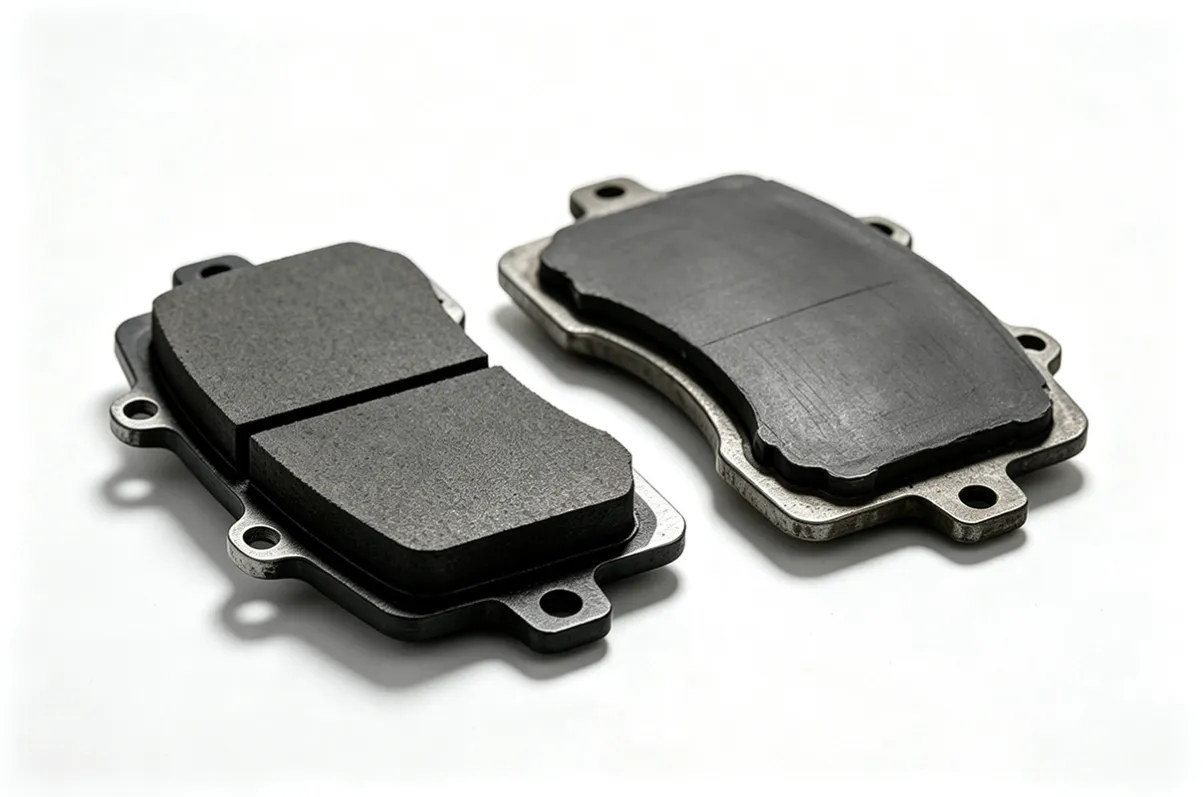
The backing plate is the metal foundation of a brake pad. It is the flat, rigid plate to which the friction material is bonded or mechanically attached. While most attention focuses on the friction material itself, the backing plate plays a critical role in brake pad performance, safety, and longevity.
A quality backing plate provides structural integrity under extreme braking forces, transfers heat evenly across the pad surface, resists corrosion in harsh environments, and maintains dimensional stability throughout the pad service life. For importers and distributors, understanding backing plate materials is essential for selecting products that meet the demands of different markets and applications.
Steel Backing Plates: The Industry Standard
Types of Steel Used
Most aftermarket brake pads use carbon steel backing plates. The most common grades include SPCC (Cold-Rolled Carbon Steel), the most widely used material for brake pad backing plates offering good strength and reasonable cost. SAPH (Hot-Rolled Carbon Steel) used in heavy-duty applications where higher strength is needed. And Q235 Structural Steel, a Chinese standard grade similar to SPCC widely used in domestic and export brake pad production.
Advantages of Steel Backing Plates
Steel backing plates are cost-effective, significantly less expensive than stainless steel. They provide excellent structural integrity, resisting bending and deformation under heavy braking loads. Steel transfers heat efficiently from the friction material to the caliper, helping manage brake temperatures. And steel backing plates can be stamped, formed, and coated efficiently in high-volume production.
Limitations of Steel Backing Plates
Without proper coating, steel backing plates rust quickly in wet or humid environments. This is particularly problematic in coastal regions and tropical climates. The long-term performance of steel backing plates depends heavily on the quality of their protective coating. Poor coating leads to premature corrosion, which can affect pad-to-caliper fitment and overall braking performance.
Stainless Steel Backing Plates: The Premium Option
Types of Stainless Steel Used
The most common stainless grades used in brake pad backing plates include 430 Stainless Steel, a ferritic grade with good corrosion resistance and moderate strength. 410 Stainless Steel, a martensitic grade with higher strength and hardness used in premium and performance brake pads. And 304 Stainless Steel, an austenitic grade with excellent corrosion resistance but higher cost.
Advantages of Stainless Steel Backing Plates
Stainless steel resists rust and corrosion without requiring additional coating. This is a major advantage in marine, tropical, and salt-road environments. Stainless steel backing plates maintain their structural integrity and appearance throughout the pad life. The consistent surface ensures a stable interface with the caliper piston, reducing the risk of uneven wear or noise. Unlike coated steel, stainless steel does not suffer from coating chips or chemical degradation.
Limitations of Stainless Steel Backing Plates
Stainless steel is significantly more expensive than carbon steel, which increases the product retail price. Stainless steel conducts heat less efficiently than carbon steel, which can affect heat dissipation during heavy braking. And stainless steel is harder to stamp and form, requiring more powerful equipment and tighter process control.
How Backing Plate Material Affects Performance
Thermal Management
The backing plate is the primary path for heat transfer from the friction material to the caliper. Steel higher thermal conductivity means heat dissipates faster, reducing the risk of brake fade during extended braking. Stainless steel, while still functional, retains more heat in the pad, which can increase operating temperatures under heavy use.
Corrosion and Durability
In regions with heavy rainfall, coastal air, or road salt usage, corrosion is a serious concern. A corroded backing plate can cause the pad to bind in the caliper leading to uneven wear, reduce the effective contact area between pad and caliper, create noise and vibration during braking, and in severe cases compromise the structural integrity of the pad.
Noise and Vibration
The backing plate material affects how the pad interacts with the caliper and anti-rattle clips. Steel backing plates with quality coatings provide a smooth, consistent surface that minimizes noise. Stainless steel surfaces are naturally smooth and resistant to surface degradation, maintaining quiet operation throughout the pad life.
Coating Options for Steel Backing Plates
Since corrosion is the main weakness of steel backing plates, manufacturers use various coating methods. Electrocoating (E-coat) is the most common coating for aftermarket brake pads providing uniform coverage and good corrosion resistance. Powder coating offers thicker, more durable protection than E-coat. Zinc plating provides sacrificial corrosion protection common in OEM applications. And Geomet coating offers excellent corrosion resistance without hydrogen embrittlement risk.
The quality of the coating directly determines how long a steel backing plate will last. Cheap coatings chip and degrade quickly, exposing bare steel to corrosion. Premium coatings maintain their integrity for years, even in harsh environments.
Choosing the Right Backing Plate for Your Market
For price-sensitive markets, steel backing plates with quality E-coat or powder coating offer the best balance of cost and performance. For harsh environments like coastal regions and tropical climates, stainless steel backing plates justify their higher cost through superior durability and lower warranty claims. For performance applications, stainless steel backing plates provide more predictable braking performance under extreme temperatures.
YQF Backing Plate Standards
At YQF Auto Parts, we offer brake pads with both steel and stainless steel backing plates to meet different market requirements. Our steel backing plates use premium E-coat or Geomet coating for maximum corrosion protection. For markets demanding the highest durability, our stainless steel options provide worry-free performance in the most challenging environments. Every backing plate undergoes dimensional verification, coating thickness testing, and bond strength evaluation before assembly.
Contact us today for product specifications and pricing.