
Sep 8, 2026Product Knowledge
Brake Caliper Types Explained: Floating vs Fixed Calipers
Learn the differences between floating and fixed brake calipers. Understand how each type works, their advantages, and which to choose for your market.
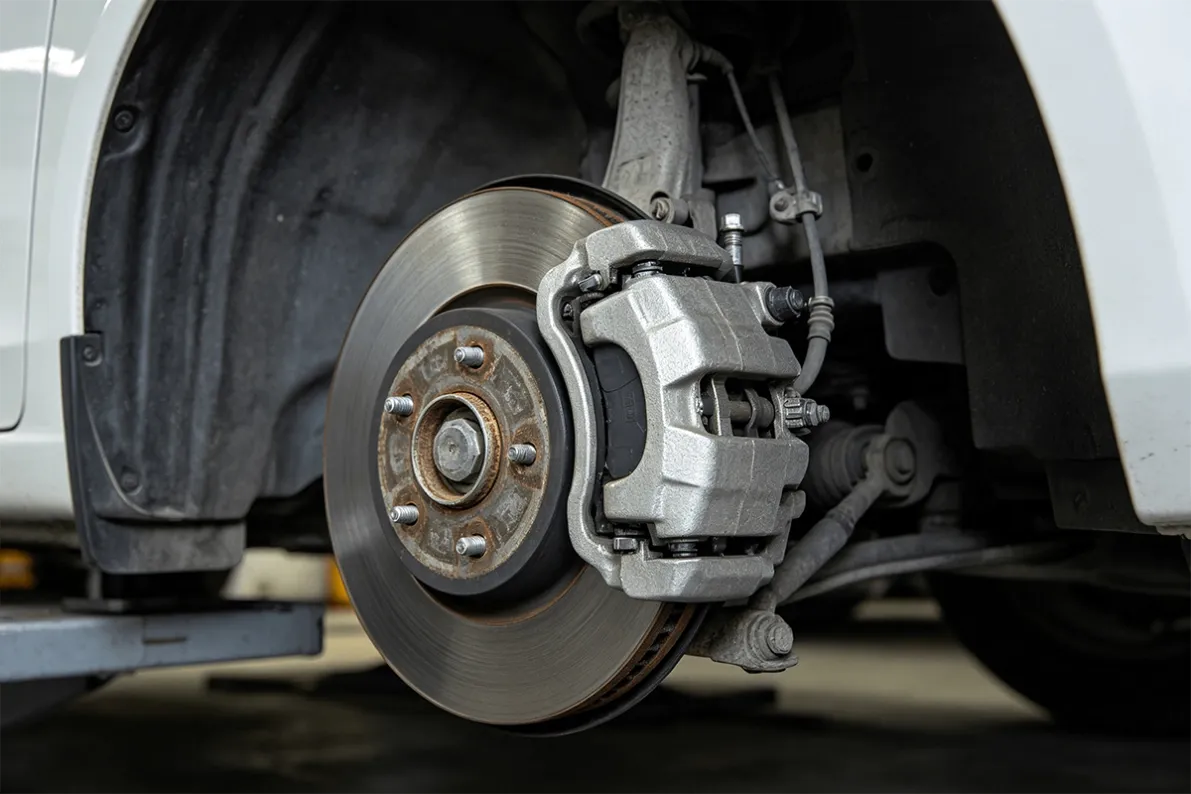
What Are Brake Calipers and Why Do They Matter?
Brake calipers are one of the most critical components in your vehicle braking system. They house the brake pads and apply pressure to clamp them against the brake disc, creating the friction that slows your car down. Understanding the different types of brake calipers helps you make better purchasing decisions and recommend the right products to your customers.
There are two main types of brake calipers used in modern vehicles: floating calipers and fixed calipers. Each has its own advantages, and knowing the difference is essential for importers, distributors, and mechanics alike.
Floating Calipers: The Most Common Type
How Floating Calipers Work
A floating caliper (also called a sliding caliper) is mounted on guide pins that allow it to move side to side. When you press the brake pedal, hydraulic pressure pushes the piston on the inner side of the caliper, which pushes the inner brake pad against the disc. The caliper then slides inward, pulling the outer brake pad against the opposite side of the disc.
This design means the caliper uses only one piston (or sometimes two on the same side) to apply pressure to both brake pads. The sliding motion ensures even wear on both pads.
Advantages of Floating Calipers
Lower cost: Simpler design means cheaper manufacturing. Lighter weight: Fewer components mean less unsprung weight. Easier maintenance: Fewer seals and pistons to service. Good for everyday driving: Provides adequate stopping power for most passenger vehicles.
Disadvantages of Floating Calipers
Less braking force: Only one side is directly actuated. Potential for uneven wear: If guide pins are not properly lubricated. Heat buildup: The sliding mechanism can be affected by extreme heat. Not ideal for performance applications: Cannot handle sustained high-speed braking as well.
Fixed Calipers: The Performance Choice
How Fixed Calipers Work
A fixed caliper (also called a rigid caliper) is bolted directly to the steering knuckle or suspension component and does not move. Instead, it uses pistons on both sides of the caliper to push the brake pads inward from both directions simultaneously.
Performance calipers often have four, six, or even eight pistons arranged symmetrically. This multi-piston design distributes braking force evenly across the pad surface, providing superior stopping power and feel.
Advantages of Fixed Calipers
Greater braking force: Pistons on both sides provide more clamping power. Better pedal feel: More direct and responsive brake pedal. More even pad wear: Symmetrical pressure distribution. Superior heat management: Larger surface area for heat dissipation. Ideal for performance and heavy-duty applications.
Disadvantages of Fixed Calipers
Higher cost: More complex manufacturing and assembly. Heavier: More pistons and material mean more weight. More maintenance: More seals and pistons that may need service. Requires precise installation: Must be perfectly aligned.
Which Type Should You Import?
For Passenger Cars and Daily Drivers
Floating calipers are the standard choice for most passenger vehicles. They provide reliable braking performance at an affordable price point. If your market consists mainly of everyday commuters and family cars, floating calipers offer the best value.
For Performance and Racing Applications
Fixed calipers are the preferred choice for performance vehicles, sports cars, and racing applications. The superior heat management and braking force make them essential for high-speed driving conditions.
Key Factors When Choosing Brake Calipers
Vehicle Compatibility: Always verify that the caliper matches the vehicle year, make, and model. Material Quality: Look for calipers made from high-quality cast iron or aluminum alloy. Piston Material: Pistons can be made from steel, aluminum, or phenolic resin, each with different thermal properties. Seal Quality: The caliper seals must maintain hydraulic pressure under extreme conditions.
Why Choose YQF Auto Parts for Brake Calipers?
At YQF Auto Parts, we supply high-quality brake caliper components for importers worldwide. Our products meet OEM specifications and are tested for reliability and performance. We are IATF 16949 certified, offer OE-spec fitment guaranteed, competitive wholesale pricing, and global shipping to 30+ countries.
Contact us at yqf@chenchat.top or visit our contact page to discuss your brake caliper requirements. We offer samples for testing and can provide custom solutions for your market.