Sep 9, 2026Certifications
ARAI Certification for Brake Parts: Your Gateway to the Indian Market
Understand ARAI certification requirements for brake parts exported to India, including testing procedures, documentation, and market access strategies.
Why ARAI Certification Matters for Brake Part Exporters
India is one of the fastest-growing automotive markets in the world, with over four million vehicles produced annually. For brake part manufacturers and exporters, the Indian market represents a massive opportunity — but access requires meeting the Automotive Research Association of India certification standards. ARAI is the designated testing and certification authority for automotive components in India, and brake parts must pass their evaluation before they can be legally sold in the Indian market.
Understanding the ARAI certification process is essential for Chinese brake pad and rotor manufacturers targeting India. The certification is not just a regulatory hurdle — it is a quality benchmark that Indian distributors and workshops use to evaluate imported products. Successfully certified products gain a competitive advantage in a market where trust and compliance drive purchasing decisions.
What Is ARAI and What Does It Do
The Automotive Research Association of India is an autonomous body established by the Indian automotive industry. It serves as the Type Approval Authority for automotive components under the Central Motor Vehicle Rules. ARAI conducts testing, certification, and homologation of vehicle components to ensure they meet Indian safety and performance standards.
For brake parts, ARAI testing covers friction performance, thermal stability, wear resistance, and chemical composition. The certification process is similar in structure to ECE R90 testing used in Europe, but with India-specific parameters and documentation requirements. Products certified by ARAI are listed in the Central Motor Vehicle Rules, which means they are legally approved for use on Indian roads.
ARAI Certification Process for Brake Parts
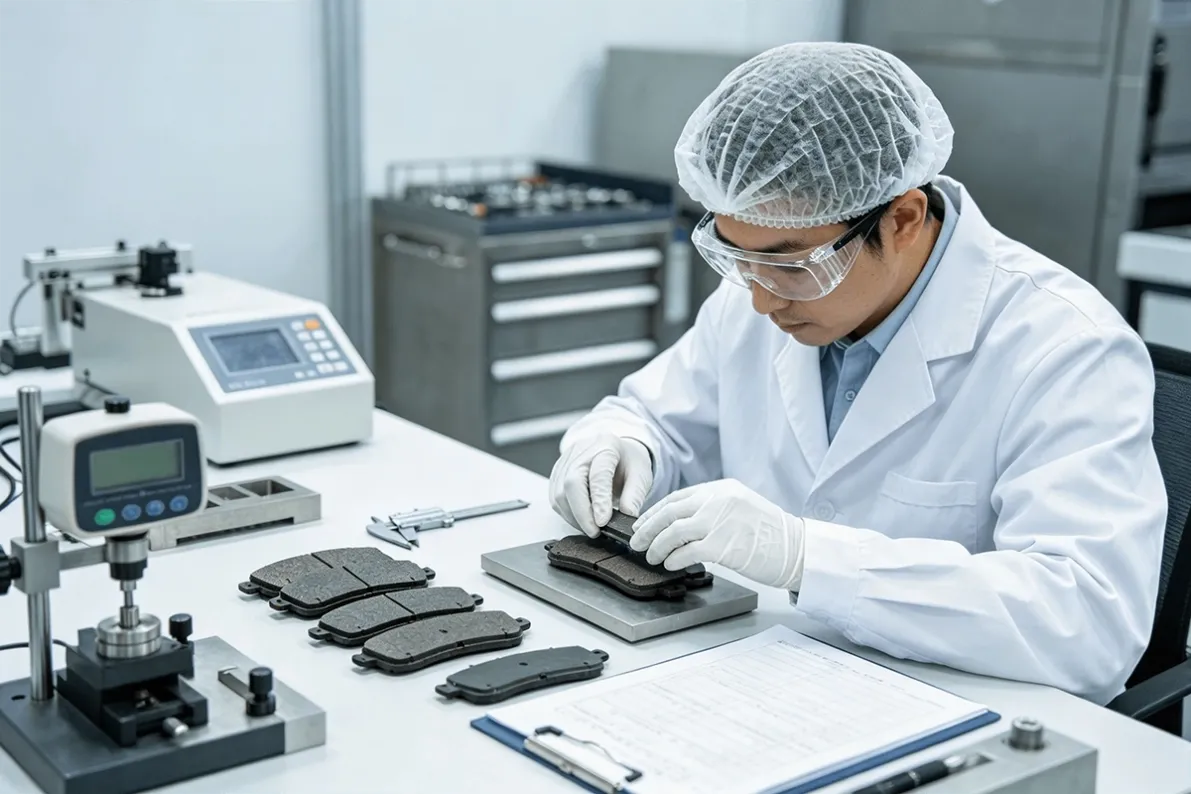
The certification process begins with an application to ARAI, followed by sample submission and laboratory testing. ARAI requires that samples be submitted from a production-representative batch, not from specially prepared samples. This ensures that the certified product reflects actual manufacturing quality.
Testing typically takes eight to twelve weeks, depending on the product type and ARAI current workload. During testing, ARAI evaluates friction coefficient across a range of temperatures, measures wear rates, and checks for compliance with chemical safety requirements. Products that pass testing receive a Type Approval Certificate, which is valid for a specified period and must be renewed before expiration.
Key Test Parameters
The core test parameters for brake pads under ARAI include friction coefficient stability at temperatures up to four hundred degrees Celsius, wear rate under standard load conditions, and cold friction performance. For brake rotors, ARAI evaluates hardness, microstructure, and dimensional stability under thermal cycling. Chemical composition is checked for restricted substances, which aligns with India growing focus on environmental compliance.
Documentation Requirements
ARAI requires a comprehensive documentation package including manufacturing process descriptions, material specifications, quality management system certificates, and test reports from the manufacturer own laboratory. ISO 9001 certification is typically expected, and IATF 16949 certification provides additional credibility. All documents must be in English or accompanied by certified translations.
Indian Market Opportunities for Certified Brake Parts
India vehicle fleet is young but growing rapidly, with increasing demand for both OEM and aftermarket brake components. The aftermarket segment is particularly attractive for imported products, as Indian consumers increasingly seek quality alternatives to locally produced components. Certified products that meet ARAI standards can command premium pricing and are preferred by authorized service centers and dealerships.
The Indian government push for road safety regulations is creating additional demand for certified brake components. Stricter enforcement of vehicle inspection standards means that workshops need to use compliant parts, which benefits certified importers. This regulatory trend is expected to continue, making ARAI certification a long-term investment in market access.
How to Prepare for ARAI Certification
Start by familiarizing yourself with the relevant sections of the Central Motor Vehicle Rules that govern brake components. Review ARAI published test protocols to understand exactly what parameters will be evaluated. If your product already holds ECE R90 or equivalent certification, use those test reports as a baseline — many parameters overlap, which can streamline the ARAI testing process.
Work with an experienced certification consultant who understands the ARAI process. They can help prepare documentation, coordinate sample logistics, and manage communication with ARAI throughout the testing period. The investment in professional support typically pays for itself through faster certification and fewer rejected applications.
Contact Us
YQF Auto Parts can help you navigate ARAI certification for brake parts destined for the Indian market. We provide test reports, documentation support, and product samples suitable for ARAI submission. Contact us at yqf@chenchat.top or visit our contact page to discuss your India market strategy.